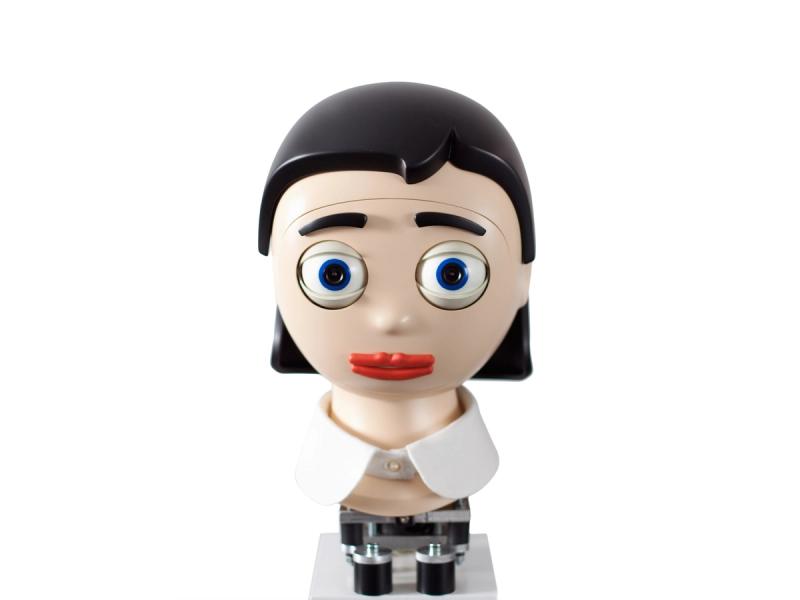
Furhat
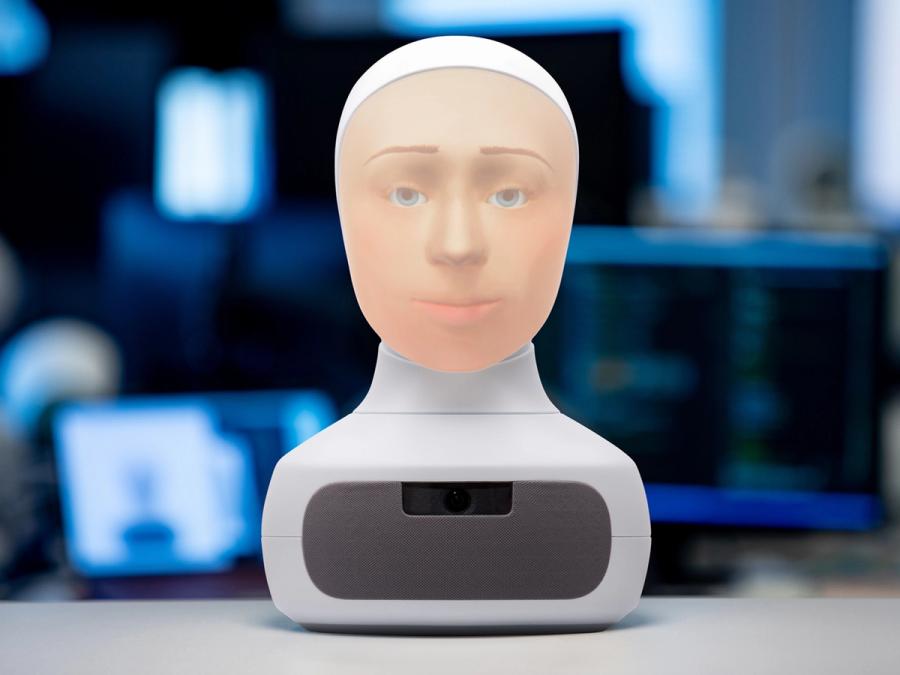
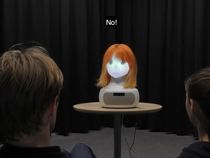
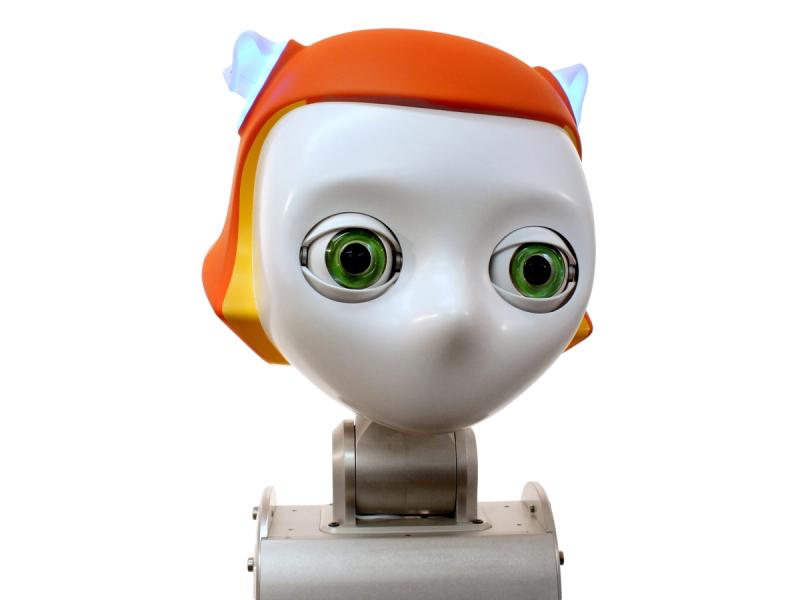
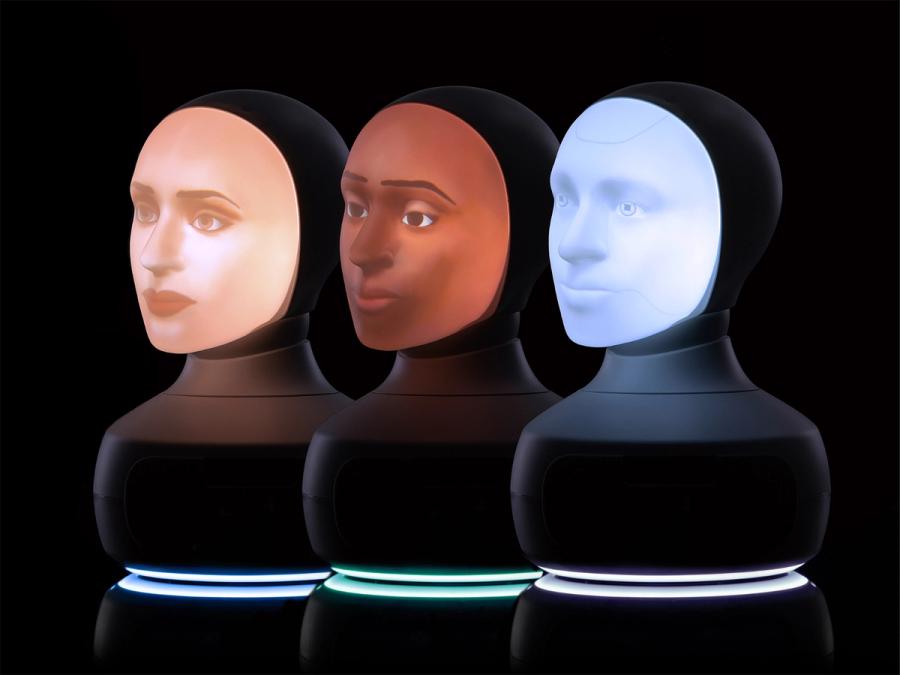
Furhat is a conversational robot head with a back-projected face designed to interact with humans in social settings. With highly expressive facial animations and a vast library of voices, it is used in academic research, education, and commercial innovation around the world.
- Creator
- Year
- 2018
- Country
- Sweden 🇸🇪
- Categories
- Features
Did you know?
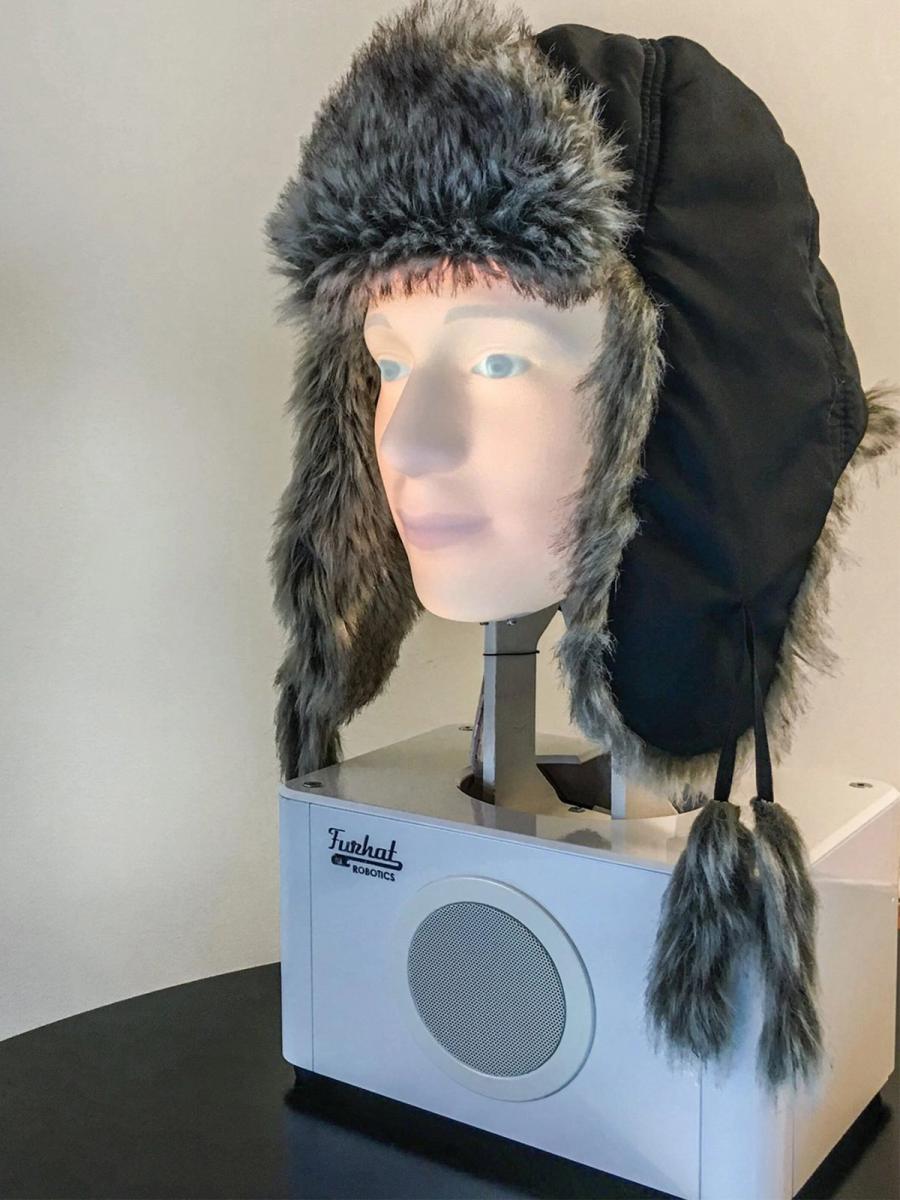
The name Furhat comes from a fur hat that was put on the first robot prototype, which had wires sticking out of the back of its head and the team needed to hide them during an event.
History
Furhat Robotics began as a research project at Sweden's Royal Institute of Technology (KTH), where a team was exploring ways for machines to hold more natural, face-to-face conversations. In 2012, an early prototype—a robotic head with a projected, animated face—demonstrated how combining speech synthesis, computer vision, and facial animation could make interactions feel less mechanical. The work attracted support from KTH Innovation, and by 2014, researchers Samer Al Moubayed, Jonas Beskow, Gabriel Skantze, and Preben Wik had spun it out into a company headquartered in Stockholm.
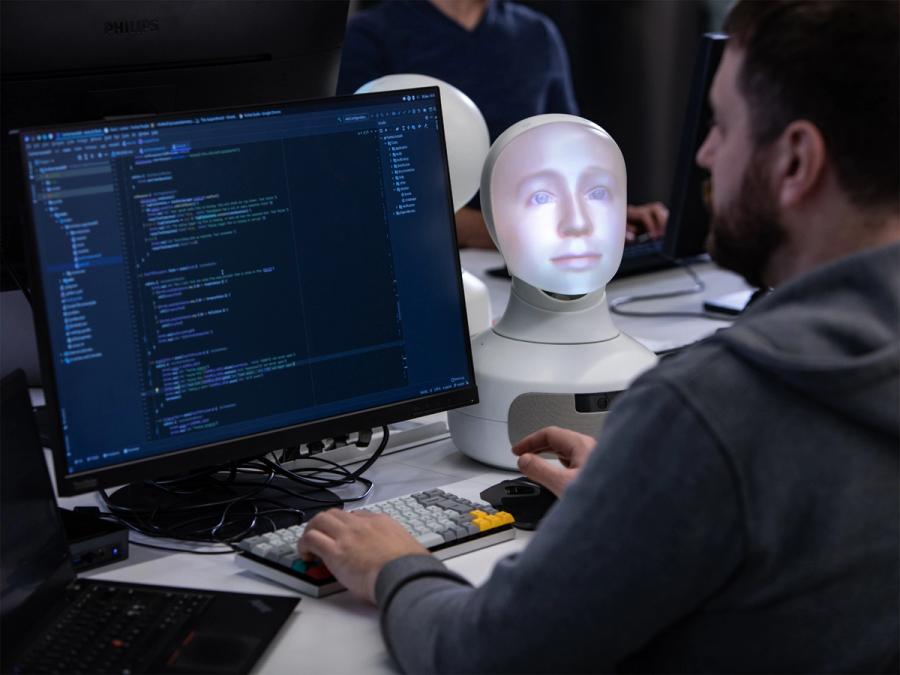
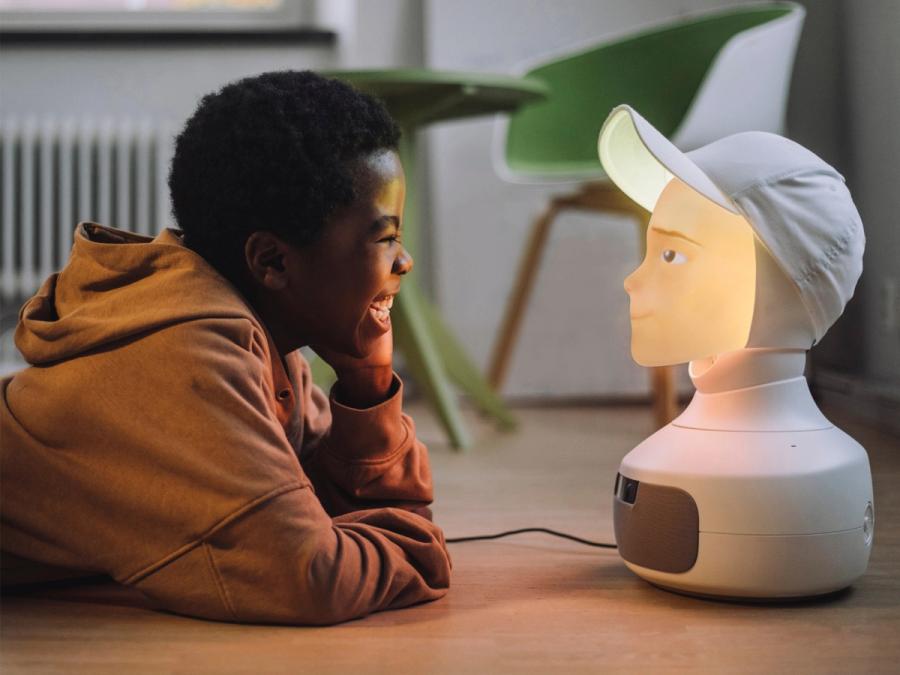
From its early years, Furhat Robotics positioned itself as a platform company, providing hardware, software, and tools for others to develop their own social robotics applications. In 2018, the company introduced a new version of the Furhat robot, a stationary head with a back-projected face that can switch between different characters, genders, and expressions. Motorized head movements, eye-tracking, and conversational AI make it capable of nuanced, adaptable interactions. Developers access the system through an SDK and simulation tools, integrating it with AI services and external applications.
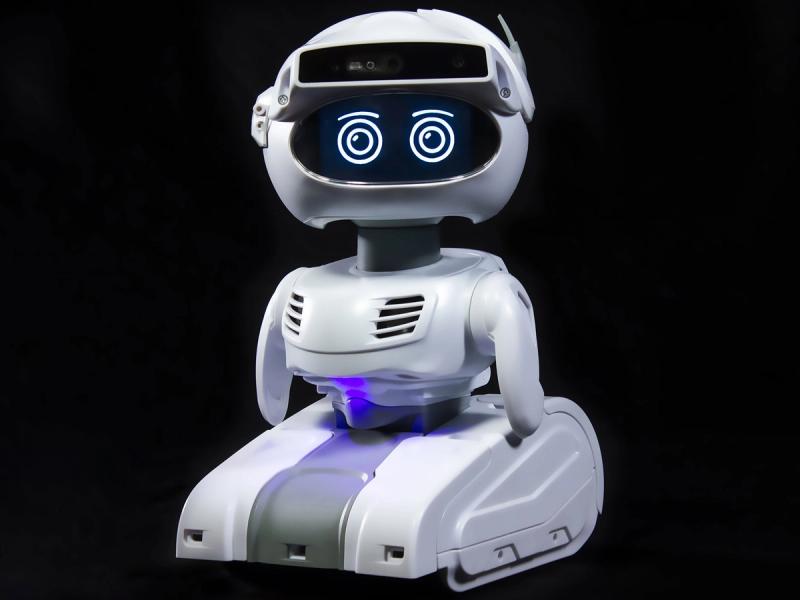
In 2022, Furhat expanded its hardware expertise by acquiring U.S.-based Misty Robotics, known for its small mobile social robot, Misty II. The move broadened Furhat's portfolio and aimed to accelerate development of next-generation social robots for use in education, healthcare, public services, and human-robot interaction research.
Previous Versions
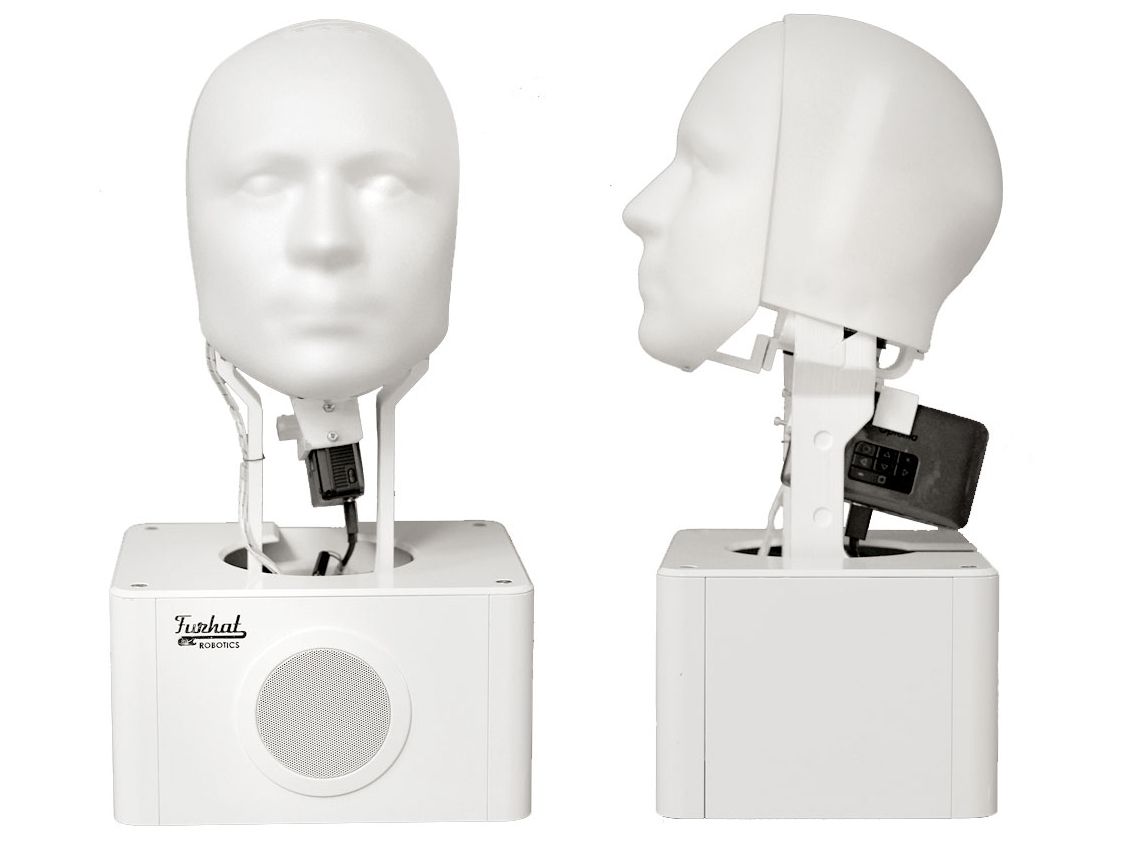
Furhat
The first generation of social robot Furhat was released in 2018.
Specs
- Overview
Voices can be customized to create robot characters with any ethnicity, age, gender, and personality. Face-tracking, multi-party interactions, external API integrations, data streaming, and logging tools.
- Status
Ongoing
- Year
2018
- Website
- Width
- 27 cm
- Height
- 41 cm
- Length
- 24 cm
- Weight
- 3.5 kg
- Sensors
Head with 1400:1 contrast 1280x720 pixel resolution, and 165 lumen projector. Main body with a fixed RGB 3.4 MP 120° diagonal FOV camera and 2 x 100 Hz-10 kHz digital, PDM stereoscopic digital MEMS omnidirectional microphones, set 180 mm apart on the robot's shoulders. Bottom RGB LED Ring for silver lining effect.
- Actuators
3 x high speed servos, active feedback, 0.088° resolution, and 25 kg·cm stall torque.
- Degrees of Freedom (DoF)
- 3 DoF (Neck: 3 DoF)
- Materials
Injection molded plastic, polymer, steel rods, aluminum shaft, 3D-printed structural parts.
- Compute
Intel Iris Plus 640 GPU and Intel Core i5 CPU with up to 3.40GHz, 8GB RAM and a 120GB SSD mass storage.
- Software
FaceCore, AudioCore, CamCore, OpenVino CV, Unity, Ubuntu Linux OS, Kotlin for native programming, Java, Web-based user interface, Websocket API, Remote API for Python, Javascript, C++, Blockly, Google Cloud ASR, Microsoft Azure ASR and TTS, Microsoft Azure OpenAI, Amazon Polly TTS, Acapela TTS, ElevenLabs TTS.
- Power
19V, 90W power input
- Cost
- US $28,000 – $34,000